
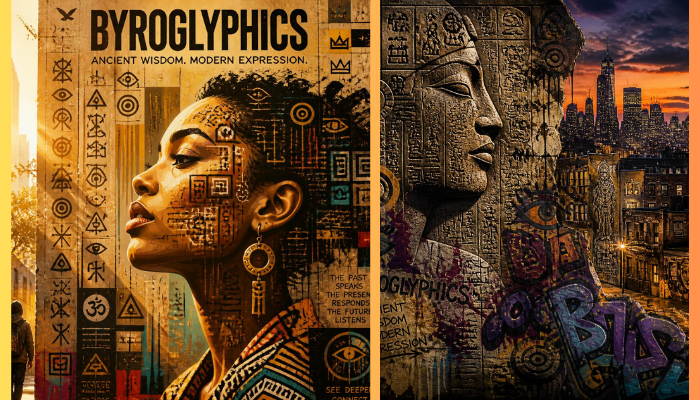

When most people hear the term “byroglyphics,” they immediately think of Egyptian hieroglyphics, those intricate symbols adorning temple walls and tomb chambers. However, byroglyphics represents something equally compelling yet distinctly different. This symbolic communication system encompasses a broader spectrum of visual language that goes beyond the narrow scope of ancient Egyptian writing.
Byroglyphics serve as a bridge between pure artistic expression and functional communication. They represent humanity’s earliest attempts to transcend spoken language and create something permanent, something that could survive the passage of time and speak across cultural boundaries. Whether carved into stone, painted on papyrus, or rendered in digital formats today, byroglyphics demonstrate our fundamental need to express complex ideas through visual representation.
The term itself suggests a system of characters or symbols, each carrying its own weight of meaning. Unlike alphabetic writing systems that build words from individual letters, byroglyphics often function as complete concepts. A single symbol might encapsulate an entire narrative, emotion, or spiritual principle. This efficiency of expression makes byroglyphics particularly powerful and continues to fascinate scholars, artists, and designers worldwide.
The Historical Origins and Evolution
The roots of symbolic communication stretch back further than most people realize. Archaeological evidence suggests that humans have been creating meaningful symbols for thousands of years. Long before formal writing systems emerged, our ancestors used visual marks to record hunts, track seasons, and preserve spiritual beliefs.
Byroglyphics didn’t emerge in a vacuum. They developed gradually as communities recognized the value of permanent visual records. Early civilizations in Mesopotamia, Egypt, and the Indus Valley all developed their own symbolic systems. What made these systems revolutionary wasn’t merely their existence but their sophistication and standardization.
Egyptian hieroglyphics, perhaps the most famous byroglyph system, consisted of approximately 700 individual symbols by the time of the Old Kingdom. Over centuries, this system evolved, incorporating new symbols while some fell out of use. The system wasn’t purely logographic, meaning it wasn’t simply one symbol per word. Instead, it blended phonetic elements with pictorial representations, creating a remarkably flexible and expressive written language.
The fascinating aspect of this evolution lies in how symbols transformed based on cultural needs. As societies grew more complex, their symbolic systems grew more sophisticated. Trade, governance, and religious expression all demanded increasingly nuanced ways to communicate detailed information. Byroglyphics adapted to meet these demands, proving that symbolic language could achieve almost anything its users required.
Decoding the Symbolism: What Different Symbols Meant
Understanding byroglyphics requires more than simply memorizing what each symbol represents. It demands cultural context and historical knowledge. Symbols didn’t exist in isolation but rather formed part of interconnected systems where meaning emerged through combination and context.
In Egyptian hieroglyphic writing, the symbol of an eye represented not only the literal organ of sight but also concepts of vision, understanding, and divine watchfulness. A lotus flower symbolized rebirth and renewal, connecting botanical observation with spiritual philosophy. These weren’t arbitrary connections but reflected how ancient peoples genuinely understood the world around them.
The power of byroglyphic symbols lay in their flexibility. A symbol could function phonetically, representing sounds rather than meanings. It could act as a determinative, clarifying the meaning of surrounding symbols. Or it could stand alone as a complete concept. This versatility allowed scribes to express virtually any idea, from the mundane record-keeping of grain stores to the profound spiritual aspirations recorded in funerary texts.
Different symbols also carried different weights and frequencies of usage. Certain symbols appeared constantly in daily life, on pottery, seals, and official documents. Others remained reserved for sacred or royal contexts. This hierarchical system reflected the structured nature of ancient societies and how communication itself served social functions beyond mere information transfer.
The Decline and Rediscovery of Ancient Byroglyphics
The story of byroglyphic writing includes a dramatic period of obscurity. As alphabetic writing systems spread throughout the Mediterranean world, they offered practical advantages. Alphabets required memorizing far fewer symbols than comprehensive byroglyph systems. This efficiency made literacy more achievable and faster to teach.
Gradually, hieroglyphic writing fell out of everyday use. By the time the Roman Empire dominated Egypt, few people could read the ancient symbols. Sacred texts remained, carved into temple walls and recorded on papyri, but the knowledge of how to interpret them seemed lost forever. For nearly two thousand years, egyptologists and curious scholars stared at these mysterious symbols, unable to decipher their meanings.
The rediscovery of byroglyphics represents one of humanity’s great intellectual achievements. The Rosetta Stone, discovered in 1799, provided the crucial key. This remarkable artifact contained the same text in three different writing systems: hieroglyphic, Demotic, and Greek. By comparing these versions, scholars like Jean-Francois Champollion finally cracked the code, unlocking access to ancient Egypt’s written heritage.
This rediscovery transformed our understanding of ancient civilizations. Suddenly, we could read the thoughts, beliefs, and daily concerns of people separated from us by millennia. The byroglyph system, once lost, became accessible again, and contemporary society gained invaluable insights into how our ancestors understood their world.
Byroglyphics in Contemporary Design and Branding
Modern designers and brands have discovered the enduring power of byroglyphic principles. The appeal is understandable: symbols that contain complete ideas communicate instantly across language barriers. In our globalized, multilingual world, this efficiency matters tremendously.
Contemporary logo design frequently borrows from byroglyph principles. A single recognizable mark should convey the essence of a company, product, or movement. Apple’s apple, Nike’s swoosh, and Twitter’s bird all function as modern byroglyph symbols. They operate similarly to ancient symbols, containing complex meanings and associations within deceptively simple visual forms.
User interface design demonstrates another clear application of byroglyph principles. Those icons on your smartphone represent concepts through visual shorthand. The magnifying glass for search, the trash can for deletion, the envelope for email. Each functions as a contemporary byroglyph, instantly communicating function without requiring text explanation.
The effectiveness of these modern applications proves that byroglyph principles aren’t merely historical curiosities. They represent something fundamental about how human brains process visual information. We naturally think in symbols and patterns. When design respects this natural tendency, communication becomes clearer and more effective. Contemporary byroglyph design continues evolving, adapting ancient principles to serve modern communication needs.
The Linguistic and Cognitive Appeal of Symbolic Communication
Why do byroglyphics continue capturing human imagination? Part of the answer lies in cognitive science. Human brains process visual information differently than text. Images trigger rapid pattern recognition and emotional responses. A byroglyph system, by encoding meaning directly into visual form, engages these natural cognitive strengths.
Byroglyphics also appeal to our aesthetic sensibilities. Unlike arbitrary alphabetic letters, byroglyph symbols often derive from observable reality. The symbol for water resembled water. The symbol for fire suggested flames. This connection between symbol and meaning creates intuitive understanding and visual satisfaction. We recognize something true in the relationship between sign and signified.
There’s also something deeply human about wanting to compress meaning into single symbols. We live in an age of information overload. The ability to communicate complex ideas quickly has become invaluable. Byroglyphics offered ancient peoples exactly this advantage. A symbol could express what might otherwise require several sentences to explain. In our contemporary context, this efficiency holds as much appeal as it did thousands of years ago.
The study of byroglyphics has influenced modern linguistics and semiotics. Scholars recognized that understanding how ancient peoples created meaning through symbols provided insight into fundamental language processes. This research has contributed to better understanding how meaning itself emerges and operates across different communication systems.
Learning Byroglyphics: Modern Applications and Resources
Interest in byroglyphics has grown substantially in recent decades. Museums offer exhibitions exploring these fascinating symbol systems. Universities include byroglyph study in archaeology and linguistics programs. Art students incorporate byroglyph-inspired elements into contemporary projects. Educational resources make this knowledge increasingly accessible.
Modern approaches to learning byroglyphics vary considerably. Some enthusiasts focus on authentic Egyptian hieroglyphic study, diving deep into phonetic values and historical contexts. Others take broader approaches, exploring symbolic communication across multiple ancient cultures. Still others use byroglyph principles more creatively, developing personal symbolic systems inspired by ancient traditions.
Digital technology has transformed byroglyph study. Online courses bring expert instruction to global audiences. Digital archives preserve images of ancient texts, making them accessible without expensive travel. Software tools allow researchers to analyze and catalog byroglyph symbols efficiently. These technological advances have democratized access to what was once reserved for specialists.
Creative professionals from various fields increasingly study byroglyphics for inspiration. Writers develop constructed languages incorporating byroglyph elements. Game designers create fictional symbolic systems drawing on historical models. Graphic designers study ancient symbol systems to strengthen their understanding of how visual meaning operates. This cross-disciplinary interest ensures that byroglyph studies remain vibrant and evolving.
The Spiritual and Cultural Significance Today
Beyond practical communication or design applications, byroglyphics retain profound spiritual significance for many people. Ancient societies viewed these symbols as connecting material and spiritual realms. That perspective hasn’t entirely disappeared. Contemporary practitioners of various spiritual traditions find meaning in byroglyph symbols, incorporating them into personal practice and philosophy.
This spiritual dimension reflects something true about byroglyphics generally. They represent our attempt to express the inexpressible, to make visible what might otherwise remain invisible. This fundamental purpose transcends historical period or cultural context. Every generation, in its own way, seeks symbolic systems through which to express spiritual truths and profound meanings.
Cultural preservation efforts have also emphasized byroglyphics. Communities with historical connections to byroglyph traditions recognize their importance for cultural continuity. Studying these symbol systems becomes a way of maintaining connection with ancestors and preserving cultural knowledge. This revitalization of interest in traditional symbols serves important cultural and psychological functions within communities.
Conclusion: The Lasting Legacy of Byroglyphics
Byroglyphics represent far more than historical artifacts or museum pieces. They demonstrate fundamental human capacities for creating meaning and communicating across barriers. The principles underlying these ancient symbol systems remain relevant to contemporary designers, linguists, and anyone interested in how meaning itself operates.
The journey of byroglyphics from their ancient origins through centuries of obscurity to their rediscovery and modern applications tells a compelling story about human culture and communication. We haven’t moved beyond symbolic communication. Instead, we’ve built upon these ancient foundations, creating new symbol systems that serve contemporary needs while honoring the principles established thousands of years ago.
Understanding byroglyphics enriches our appreciation for human creativity and ingenuity. It reminds us that people throughout history have grappled with similar challenges of expressing complex ideas through visual means. Whether carved in stone temples or rendered in digital interfaces, byroglyphics continue speaking to something fundamental within human nature: our need to create, to communicate, and to make meaning from the world around us.
See also: Jay Labrador: Golden-Hearted Dogs with Timeless Appeal